The Energy Company Obligation is about to be evolved, as ECO5 is set to begin in 2026 and most likely will continue till 2030. Its goal is to boost the process of making homes more sustainable by focusing on more eco-friendly heating, smarter systems, and more thorough fabric upgrades. If you’re wondering, “When does ECO5 start?” or “What will the ECO5 scheme cover?” This overview will provide you with what has been confirmed so far, how eligibility for the ECO5 scheme may change, and what households should do now to get ready for ECO5 grants.
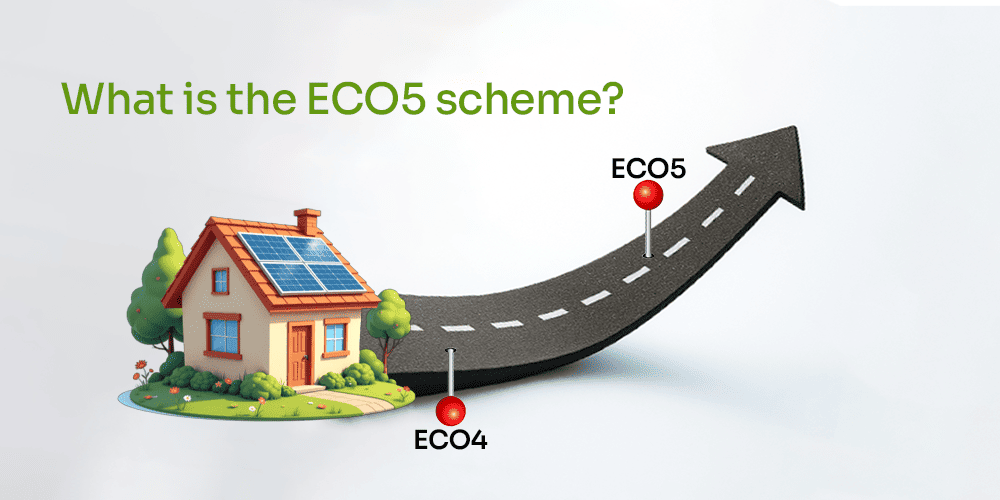
What is the ECO5 scheme?
The next phase of the UK Government’s Energy Company Obligation (ECO) is called ECO5 and is scheduled between 2026 and 2030. ECO5 will require obligated energy suppliers to compensate for energy saving improvements for eligible households, just like the previous phases of ECO.
What the ECO5 Scheme Means for UK Households
The ECO5 programme is regarded to be the most visionary step so far. The main purpose is to help UK homes lower their carbon emissions and save on energy bills by providing them ECO5 grants for renewable heating, solar power, better insulation, and smart energy systems.
The ECO5 programme is expected to be open to every low-income or benefit household. It will also be open to residences that emit an excessive amount of carbon dioxide.
The government’s goal is to pay for solutions that save money and produce less carbon in years to come; this way, the ECO5 fits with the UK’s Net Zero 2050 target.
Who Qualifies for ECO5?
The ECO5 programme is meant to support the homes that will reduce the most carbon and help the families that need it the most. The government and Ofgem will clarify the final rules; however, based on the ECO5 consultation and the current direction of policy, you need to fall under this criterion to apply for the grant:
1. High Carbon-Emitting Homes
ECO5’s main goal is to cut carbon emissions. Homes with poor insulation and high yearly heating emissions (kg CO₂/year) will be prioritised.
A small, inefficiently insulated electric-heated home could be better than a bigger gas-heated house.
EPC ratings, the type of heating system, and some other property data are used for determining if someone is eligible and how much carbon they are responsible for.
2. Low-Income & Benefit Households
Qualifying benefits under the ECO Scheme:
- Pension Credit
- Universal Credit
- Income Support
- Jobseeker’s Allowance
- Employment & Support Allowance (ESA)
- Housing Benefit and related support
3. LA Flex & Health Referrals
Families who are still using older boilers and are having health problems like breathing problems and heart problems because of cold environments can still qualify under:
- LA Flex (Local Authority Flexible Eligibility)
- Referrals for NHS health
This means that an individual can still qualify even if they don’t meet strict income requirements, as they are in need.
4. Tenants & Landlords
- Tenants are eligible to apply for government free boiler grants after getting permission from their landlords.
- Property owners can apply directly if they satisfy the requirements.
- Private landlords are more likely to get the government grants, as it will improve their rental properties, especially those with low EPC ratings.
- People who rent social housing are often able to get help from various programmes run by a local authority or a housing association.
5. Low EPC Ratings
The main focus is still on properties with EPC D, E, F, or G ratings. The threshold is higher under ECO5; homes need to be upgraded to at least EPC C (or even B if possible).
ECO4 Scheme Eligibility
“100% Free Check – No Hidden Fees”
Timeline and Implementation
The UK government will confirm the final launch date after, but till now it is expected to happen in April 2026.
ECO5 is expected to last from 2026 to 2030, which means that UK households will have four years to apply for the free boiler scheme.
The UK government and Ofgem will most likely conduct public consultations before the official launch. This will determine who can participate in the ECO5 scheme, which types of improvements are funded, and how suppliers can achieve their goals.
What will the UK accomplish with ECO5?
- The goal of ECO5 is to boost the process of switching from fossil fuel boilers to low-carbon heating systems.
- Building materials that work better can help homes use less energy.
- To deal with fuel poverty, the ECO4 scheme will help families who are struggling to pay for their energy bills.
- Supports smart energy management, on-site generation (solar), and storage (batteries), as well as low-carbon heat sources to help the UK reach its target of net-zero carbon emissions.
In short, the ECO5 scheme wants to give you bigger, longer-lasting savings on carbon and energy bills than the previous ECO Phase.
The ECO scheme evolution — lessons from ECO1 → ECO4
To get an idea of what the ECO5 scheme could look like, it’s helpful to look at how the Energy Company Obligation has changed over time:
- ECO1 (2013–2015) was mostly about methods to save energy that were particularly affordable, like cavity wall and loft insulation.
- ECO2 (2015–2017) initially came out as an effort to insulate homes and carried on to help low-income families. As a result, rules for energy suppliers became stricter.
- ECO3 (2018–2022) was all about minimising heating expenses. It was mostly about replacing boilers while making homes for low-income people more energy-efficient.
- ECO4 (2022–2026) was an important shift as it focused on the fabric of the home first. It fixed the whole structure (insulation, walls, roofs) before adding better heating because replacing only boilers was very hard.
The main point of ECO5 is that each phase has gotten closer to being sustainable in the long term. The ECO5 Scheme is expected to take the goals of the ECO4 scheme to the next level by doing more than just fixing insulation and providing free boiler grants. It will likely offer support for a heat pump or biomass boiler, solar energy, battery storage, and retrofitting whole houses to help regions like England and Wales reach Net Zero by 2050.
What are the Key Differences? ECO4 vs ECO5
| Comparison | ECO4 Scheme | ECO5 Scheme |
| Duration | July 2022 – March 2026. | Expected April 2026 – March 2030. |
| Budget | About £4 billion. | Probably about the same or a little higher. |
| Primary Focus | Fabric-first approach and add insulation before upgrading the heating. | A carbon-first approach means putting in low-carbon heating, renewable energy, and whole-house retrofits. |
| Replacements included | Insulation for the loft, cavity wall, floor, and solid wall; limited boiler replacements; some smart heating controls. | Hybrid systems, solar PV, battery storage, insulation, smart energy systems, and possibly connections to heat networks, heat pumps or biomass boilers. |
| Eligibility Criteria | Homes with low incomes or benefits, D–G EPC rating. | Homes with low incomes and high carbon emissions and a D–G EPC rating. |
| Boiler Types | Very limited boiler replacements were allowed. | Focus shifts from gas boilers to emphasis on renewable systems instead. |
| EPC Ratings | Raise homes to EPC level C when you can. | Expected to have an upgrade up to EPC C or even B. |
| Local Authority Role | Are part of Local Authority Flexible Eligibility (LA Flex) and health referrals. | LA Flex and NHS referrals will remain part of it. |
| Technology | Offer upgrades to traditional insulation and repairs to heating systems on a smaller scale. | Strategies for full decarbonisation, smart technology, and solar and battery storage. |
| Policy Goal | Lower energy bills, improve EPC ratings, and reduce fuel poverty with certified boiler installers. | Support the UK’s Net Zero 2050 goal and drive large-scale decarbonisation of homes. |
Types of Technologies Promoted in the ECO5 Scheme
Renewable heating systems (heat pumps and biomass)
- Air Source Heat Pumps (ASHP)
They are likely to be the primary focus, as they are now cost-effective when used on a large scale and are supported by the national heat strategy. ECO5 grants are expected to pay for ASHP installations in homes which satisfy the requirements. Sometimes, these grants will be used to pay for hybrid systems that are compatible with existing boilers.
- Ground Source Heat Pumps (GSHP)
This is considered good for homes that have a garden. Families could qualify for free ground source heat pumps if they meet criteria. Ground Source Heat Pumps (GSHP) use heat that is naturally present in the ground to heat surfaces in an efficient and renewable way. They save a lot of energy over the long term.
- Biomass Heating Systems
Biomass boilers are another type of renewable heating that is supported under the ECO5 scheme or Boiler Upgrade Scheme (BUS), where households can get £7,500 off the new eco boiler cost. They use wood pellets or chips to heat homes in a way that is efficient and low in carbon. This is great for homes in rural areas or off the grid where heat pumps may not function well.
- Hybrid systems
They are boiler and heat pump systems that are used when it takes longer to install a full heat pump right away.
Insulation & building fabric improvements
- Solid wall insulation (internal/external)
It is expensive but very effective. ECO5 will likely continue covering the costs for homes that are hard to treat.
- Cavity wall, loft, and floor insulation
They are one of the most important steps. ECO5 may lead to better materials (like better U-values) and more thorough approaches to the whole house.
- Window & door upgrades
This includes selective double or triple glazing, especially if heat pumps are installed to keep the system working well at low temperatures.
Solar PV & battery storage
Solar PV minimises reliance on imports from the grid, and when paired with batteries, it may transfer consumption to power that is generated locally. This scheme is likely to increase government funding for solar and storage for eligible households, particularly those with high daytime loads or electric vehicles.
Battery or hybrid storage enables homes to store PV output and use it more evenly. ECO5 should focus on systems that are the right size for homes.
Smart heating & energy-management systems
ECO5 is expected to pay for smart thermostats, whole-home energy management systems (HEMS), and control systems that work together to control heating, solar panels, and batteries. By making sure that renewables and storage are used in the best way possible, these systems double the savings and minimise carbon emissions.
Technology classification under the ECO5 Scheme
Heat network connections:
ECO5 can potentially pay for connections to local heat networks in certain cities. These networks facilitate a central low-carbon source to heat multiple homes or buildings at the same time. Connecting homes to these systems could cut off the need for individual boilers and lower carbon emissions further.
Ventilation:
Along with insulation, the ECO5 scheme is additionally promoting actions like upgrading mechanical ventilation. This will help in keeping the air clean and stopping condensation and mould, which can happen in homes that are airtight and newly insulated. This way both ventilation and insulation can work at the same time, which will make your home more comfortable and healthier in the long run.
Electrification:
Several consultation reports have suggested that EV chargers might be part of ECO5. However, it’s more likely that instead of ECO5, other government programmes will continue to offer grants for EV charging stations, while ECO5 will focus on heating, insulation, and renewable energy instead.
FAQs
When will ECO5 start?
After the government approval, it is more likely to start in April 2026 and last until March 2030.
Who will qualify for the ECO5 grant?
Households with low incomes, benefits, or homes that emit high carbon yet have low EPCs (D–G) will be given priority.
What type of upgrades will ECO5 cover?
ECO5 is likely to include air and ground source heat pumps, hybrid heating systems, solar panels, battery storage, advanced insulation, smart heating controls, and possibly linkages to heat networks too.
Will ECO5 replace boilers?
ECO5 will not be only focused on boiler replacement like ECO3. Instead, it will provide for heating systems emitting less carbon, such as heat pumps and hybrid systems.
Is ECO5 only for homeowners?
No. Homeowners, renters (with the landlord’s permission), and landlords can all apply if they qualify.
How much money can I save using ECO5?
The amount you save depends on your home and the upgrades you install. With insulation and a heat pump, a typical household might save £300 to £600 a year and additionally release less carbon.
Where can I get the latest official ECO5 news?
For the latest confirmed ECO5 scheme details, check the government’s official websites, gov.uk Energy Company Obligation and Ofgem ECO consultations.