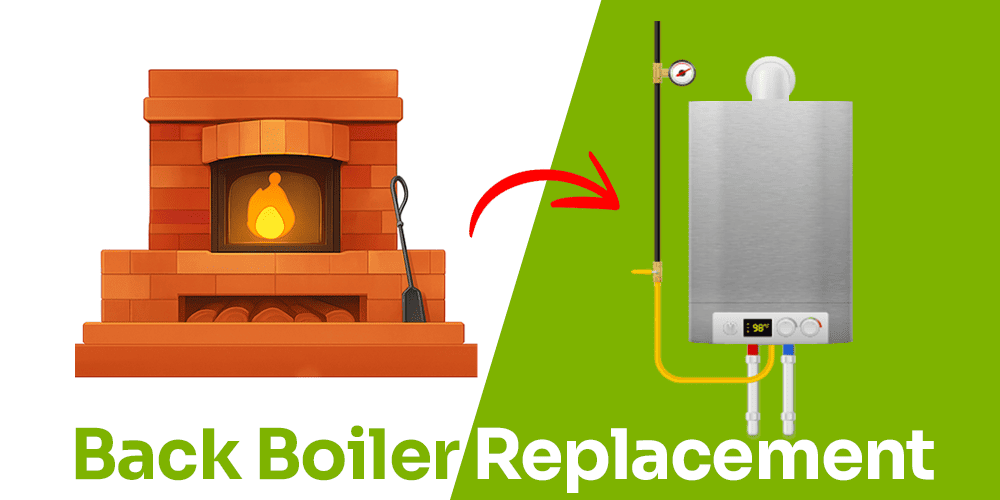
In upcoming years the back boiler will become a thing of the past, but if your home still has a back boiler, that doesn’t mean you’re the only one, as millions of homes in the UK use these old-fashioned heating systems that were installed decades ago.
Many years ago the back boiler was thought to be the most effective way to heat homes, but now it costs way more than other modern heating systems. The cost to run a back boiler has been on the rise as fuel poverty is increasing and the cost of fuel is increasing day by day.
So today the most pocket-friendly and less costly option for homeowners that use a back boiler is to replace the back boiler with a new, better heating system.
What is a back boiler?
Back boilers are a traditional form of heating technology that were generally put in homes in the middle to late 20th century. They work by placing the boiler mechanism right behind your fireplace and using the heat from the fire to warm water that is stored in another cylinder. The heated water eventually circulates through your home’s radiator system and provides hot water to your taps. While this design was thought to be efficient for the time, modern heating standards show that these older systems have a lot of problems.
How Does a Back Boiler Work?
A hot water storage tank which is typically found in an air conditioning room. You can connect it to a back boiler that is below your fireplace. The system gets water from a cold water tank, which is usually in the loft. The fire heats the water as it comes in. The tank keeps the hot water so that it can be used throughout the house to run showers, taps, and heat radiators. The way your fireplace is set up indicates that the heat from it also controls your central heating system. But these types of systems waste a lot of energy, as a lot of the heat goes up the chimney and out the back. Modern boilers, on the other hand, are able to absorb this heat and use it again.
Reasons Why You Should Replace Your Back Boiler
Replacing your back boiler goes far beyond the initial grant. A lot of households are unfamiliar with the financial and practical downsides of keeping a back boiler system running:
Low Operating Cost:
Depending upon your consumption and fuel type, you can save up to £350-£500 per year on your heating costs.
Increase in Property Value:
Improving sustainability ratings makes your property appealing to the purchasers and can improve its market value.
Long-term Reliability:
Most new systems have manufacturer guarantees and inexpensive parts, which can be helpful for avoiding future maintenance problems and spending.
Less Replacement Cost:
If no financial grant is given, back boiler replacement can normally cost between £3,000 and £5,000, which makes the ECO4 support immensely beneficial.
Energy Inefficiency:
Energy inefficiency: Typically, these traditional systems operate at 60–70% efficiency, leading to a waste of approximately a third of your fuel expenses. When you compare this to modern condensing boilers that get efficiency ratings of more than 90%, the difference is clear.
Maintenance Challenges:
Finding substitute parts has become increasingly difficult and costly as manufacturers stopped producing them for these older models. When maintenance is needed, homeowners generally have to wait for an extended period and spend a lot for parts that are difficult to get.
Regulatory Compliance:
Back boilers are not quite reliable, meaning that they emit more carbon into the air. The result stands against the current attempts to nurture the environment and reach sustainability goals.
Environmental Impact:
Back boilers are not highly efficient; therefore, they emit more carbon into the air. This stands against the present attempts to maintain the environment and fulfil sustainability goals.
How Much Does a Back Boiler Replacement Cost?
The main issues that affect how much it costs to replace your back boiler are eliminating the old one and installing the new one. Homeowners usually have to pay between £3,000 and £5,000 to get rid of an old boiler and install a new combi boiler.
If you ask your installer to replace the old boiler instead of just removing it. This process can save you up to £1000.
This might seem like a lot of money in the beginning, but moving to an energy-efficient system will save you a lot on your energy costs over time. This is an excellent long-term investment for both the environment and your comfort.
What To Do With Your Old Back Boiler in the UK?
There are a range of new heating systems available to make your upgrading journey easier than ever.
Replace the Back Boiler with a Combi Boiler
These systems are the number 1 choice for small property owners, as they provide both heating and instant hot water in a single system. They are best suitable for homes with minimal hot water demands.
Replace the back boiler with a biomass boiler.
Like other industrial boilers, biomass boilers are a system that generates heat and energy. But, instead of consuming natural gas, coal, or other fossil fuels, biomass boilers generate energy through biomass combustion.
Replace Back Boiler with a Regular Boiler
They are eco-friendly heating systems that can significantly reduce your carbon footprint while also providing long-term efficiency.
Replace the back boiler with an air source heat pump.
A heat pump that uses air looks similar to air conditioning units. It absorbs the heat from the outside air and uses that to increase the temperature inside the home. Its size decides how much heat they need to generate for the house. A bigger pump means more heat.
Planning Back Boiler Replacement
Many factors should be considered while replacing your back boiler.
System Placement:
Many homeowners prefer to move their new boiler to more practical areas, such as kitchens or other utility rooms, to save extra space.
Insulation Improvements:
Combining your boiler with enhanced insulation can maximise your energy savings and comfort.
Hot Water Requirements:
Hot water consumption works more effectively if it is from system boilers rather than combination units.
Structural Modifications:
Sometimes the homes in which the back boilers are installed need several other modifications as well; your installer will choose whether your building needs any changes or not.
Are There Back Boiler Removal Grants?
The Energy Company Obligation 4 (ECO4) is a government-funded programme that helps UK homeowners and renters upgrade their heating systems by replacing back boilers. This programme allows eligible households to switch from old, inefficient heating systems to new, more energy-efficient boilers.
The ECO4 grant allows households that are eligible to get:
- Elimination of back boilers
- Installing new high-efficiency condensing boilers
- Switch to more renewable heating alternatives such as air-source heat pumps or combi boilers
- Complete system upgrade with no upfront cost
Eligibility Criteria for the Back Boiler Replacement Grant
The ECO4 program is targeted at properties that would benefit the most from improved heating. If your current situation falls under any of the following, you may qualify:
- Homeowners and private tenants can both get help compared to the ECO4 scheme.
- Households with Energy Performance Certificate grades of D, E, F, or G get priority.
- Households that get benefits like Universal Credit or Pension Credit, etc.
Local Authority Flexibility:
Even if you fail to apply for subsidies, your local council may still see you as eligible under LA Flex rules if they assume you are fuel-poor or vulnerable.
Want to replace your back boiler?
To upgrade your old system to a new one, first you need to complete the ECO4 registration, as it is essential for installation.
Assessment:
Get in touch with our licensed installer to assess your present heating system and determine your eligibility for the scheme.
Survey:
If you qualify for the initial assessment, a professional will visit your property to assess the condition of your back boiler and, overall, your property.
Application:
The installer of your choice will handle any necessary paperwork and financing applications on your behalf.
Installation:
A certified Gas Safe engineer will be provided that can help remove your current back boiler and install a new heating system in accordance with the industry standards. This whole process will be thoroughly examined and legalised by the authorities.
FAQS
Is it worth replacing an old boiler?
Usually older boilers cost more to maintain than replace. So, a new boiler could be more efficient and save you money in the long run.
What is the best replacement for a back boiler?
A smaller home is best with a combi, whereas a system boiler for larger households or an air-source heat pump for eco-friendly heating is the best choice.
How long does a back boiler last?
generally, 15–20 years, but many are now outdated and inefficient.
What are the disadvantages of a back boiler?
It has low efficiency, high running costs, outdated technology, and potential safety risks.
Is it expensive to remove a back boiler?
Yes, removal can cost £3,000–£5,000 without a grant, but ECO4 funding can eliminate these costs.