To experience a secure and efficient heating system, it’s necessary to keep the pressure in your boiler at an appropriate level. When the pressure becomes too high, it may trigger not just simply making your boiler work less efficiently. It may additionally make it last less long, leak, or even shut down.
We’re going to discuss what high boiler pressure means, what causes it, how to lower it safely, and how to keep your heating system functioning effectively throughout the year.
What Is Boiler Pressure?
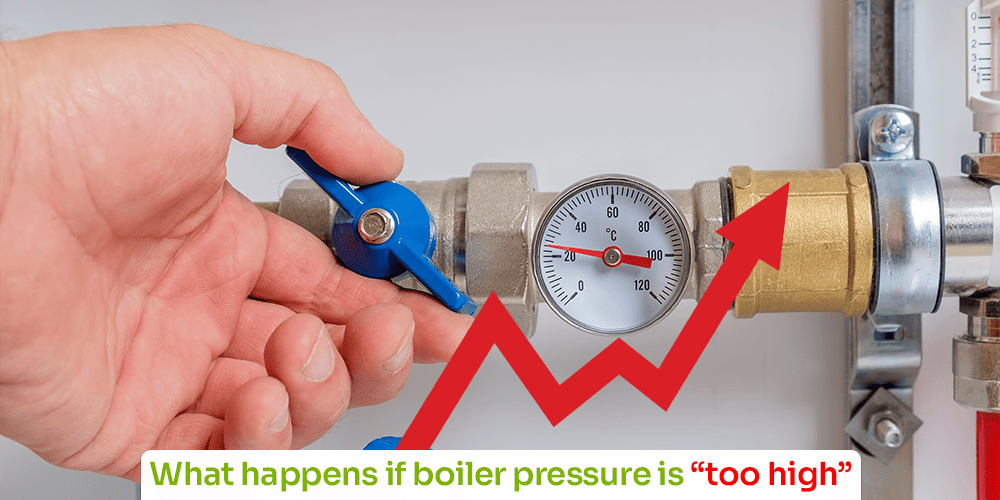
Boiler pressure is the amount of air and water that are balanced in your central heating system. The front side of your boiler possesses a tiny clock-shaped pressure gauge which displays the amount of pressure in the form of a bar.
The amount of pressure in the boiler impacts the way hot water flows through your pipes and radiators. The heater will not be able to push water through the radiators effectively if the pressure is too low; thus, they remain warm. If the pressure is too high, your pipes, valves, and joints will be under excessive pressure, which might lead to leaks or automatic shut-offs.
When the system is cold, the ideal boiler pressure for most modern combi and system boilers is between 1.0 bar and 1.5 bar. It’s common for the water level to climb to 2 to 2.5 bar when your heater is on. That should be sufficient. You need to devote your attention to another issue.
What Is Considered High Boiler Pressure?
When the gauge measurement exceeds 2.75–3.0 bar, your boiler pressure has become too high.
Most boilers have a pressure gauge that shows various colours in different areas:
- Safe operating pressure (about 1–2 bar) within the green zone.
- High levels of pressure, like 2.75 bar or more, are shown in red zones.
If your boiler pressure is in the red zone or your system continues to shut down, the pressure relief valve (PRV) is probably opening to keep the system from experiencing excessive pressure. This safety feature stops explosions, but high pressure all the time can damage seals, cause leaks, and make equipment less efficient over time.
ECO4 Scheme Eligibility
“100% Free Check – No Hidden Fees”
Reasons Why Boiler Pressure Becomes Too High
Below are a few common reasons why the pressure in your boiler could rise up.
1. Overfilling the System
It’s not difficult to let in too much water if you’ve just filled your boiler with the filling loop. This is the primary reason why there is a lot of pressure.
When you fill up, always stop when the gauge reads between 1.2 and 1.5 bar. You will have to let some water out if it goes higher.
2. Cracked Expansion Vessel
As water heats up and expands, the expansion vessel responds to the changes in pressure. If it gets flat or loses its air supply, there is no place for the water to escape, resulting in the pressure rising quickly.
To correct this problem, you typically require a Gas Safe engineer to restore pressure or replace the vessel.
3. Broken pressure relief valve (PRV)
The PRV lets through additional stress on its own. If it’s malfunctioning or stuck, the pressure can rise too high. You might also see water dripping from a copper pipe outside your house. This is the PRV releasing water.
4. Filling Loop Left Open
It’s possible that one or both of the filling loop valves had been left slightly open, permitting water to enter into the system all the time. This slowly raises the pressure even when you lack heat.
5. Growth of Limescale or Sludge
Older systems may suffer pressure spikes in specific places due to blockages inside. If sludge or scale blocks certain areas of the system, pressure may build up around other parts of the loop.
6. Faulty Thermostat or Sensor
If your thermostat or sensor is broken, your boiler might lack the ability to control the temperature of the water properly, which can result in overheating and higher pressure.
Signs Your Boiler Pressure Is Too High
You don’t generally have to be an engineer to see high pressure. Just keeping an eye out for these signs can help you find out if your boiler pressure is high:
- If the reading on the gauge is above 2.75–3
- Water leaks from the boiler or pipes
- Boiler frequently shutting off or breaking continually
- The buzzing sounds like whistling or banging.
- Leaking from the copper pipe on the exterior (PRV outlet)
- Radiators bleeding water excessively during maintenance
How to Lower Boiler Pressure Safely
Putting safety first is the most important thing. Before we do anything, let’s make sure your boiler is turned off and has had time to cool down. Never try to open any valves or drain the system when it’s hot, as the hot water can burn you badly.
Step 1: Take a Peek at the Pressure Gauge
Check out the pressure gauge on the front side of your boiler first. You can relax if the needle is in the green zone, which is usually between 1 and 1.5 bar.
If it’s pushing up towards 2.5 or 3 bar, which is generally in the red zone, it’s a little too high, and we can slowly bring it back down.
Step 2: Gently Let Some Pressure Out at a Radiator
- Put a cloth under the valve to collect any liquid that drips.
- Turn the key to the left slowly until you hear a hissing sound.
- When the hissing sound stops and a tiny drop of water starts to flow, turn the key clockwise to close the valve.
Look at the pressure gauge on your boiler. You’re done if it’s back in the green (1–1.5 bar). If not, do it once more on another radiator.
Step 3: A Quick Double-Check
It’s also beneficial to take an immediate look into the “filling loop” while you’re there. That twisted hose connects two pipes that are under your boiler. Check whether the two handles are properly turned off. They can be slightly open at times; that allows small amounts of water into the system and raises the pressure over time.
Step 4: A Quick Restart
Several newer boilers can continue to display a malfunction indicator even after you regulate the pressure. They just need to be reset so they understand that everything is fine now. The instructions for this will be in your boiler’s manual. The majority of the time, it’s as simple as pressing and holding a button.
Step 5: Know When to Call for Backup
If the pressure rises upward once again in a few hours, your boiler is attempting to notify you that something might be wrong.
At that point, it’s best to call an approachable, qualified heating engineer. They are equipped with the right tools and know-how to find out the issue and fix it.
How to Prevent High Boiler Pressure in the Future
It’s always better to prevent something from happening than to fix it. Here are some tips for maintaining your pressure properly:
- Check the gauge each month – You can identify early changes with a quick look once a month.
- Never overfill; when you add more water, try to stay between 1.0 and 1.5 bar.
- Schedule yearly inspections so that engineers can identify broken valves, weak expansion vessels, or leaks before they cause big problems.
- Install a magnetic filtering device to help prevent dirt and debris from blocking pipes and raising pressure.
FAQs
Is high boiler pressure dangerous?
No, it’s not generally dangerous because the heating system is protected by a pressure relief valve (PRV).
How often do I need to add pressure to the boiler?
In most cases, once or twice a year. There will probably be a tiny leak in your system when you’re required to fill it up every few weeks.
What will happen if the boiler pressure stays high?
Constant high pressure can wear out components inside the machine, cause leaks, or make it shut down often.
Is it possible for me to bleed the radiators myself?
Yes, it’s a simple and safe job to do yourself as long as the boiler is off and the radiators are cool.