
Choosing a suitable boiler is an important component of heating your home in a way that can be both efficient and affordable. Electric and gas boilers are both of the most popular methods to heat homes in the UK. Both provide consistently reliable heat and hot water, yet each has its own pros and cons that make it better for certain homes and means of life.
The majority of homeowners are asking, which is better, electric or gas boilers? as energy costs rise and the UK works to cut down on carbon emissions.
This guide goes over every part of both systems so that you can make a smart choice for your property that will last.
Pros and Cons of Electric & Gas Boilers
Switching your heating system can make your energy bills rise, which can result in your new system not functioning effectively and costing more to maintain. Homeowners should look at all the pros and cons of electric boilers and gas boilers that can help them choose which one is best for them, considering things like efficiency, installation requirements, fuel costs, and reliability over time. The UK government is working for net-zero emissions, and new energy regulations are expected. Making the right choice now could save you thousands of pounds in the future.
Types of Boilers in the UK: Comparing Electric and Gas Heating Systems
Boilers are essential for keeping UK homes warm and providing hot water throughout the year. In the UK, you can find a lot of different kinds of boilers on the market today. These include gas boilers, electric boilers, and renewable heating systems like air-source and ground-source heat pumps.
Gas boilers have become the most preferred option for British homes for decades, considering they are relatively inexpensive and heat up rapidly. But because the government is committed to reducing emissions to zero and individuals have grown more aware of how to save energy, electric boilers are now quickly becoming the most popular choice. They are small, quiet, and don’t release any emissions at the point of use.
As more people look for heating systems that are beneficial for the environment and reduce energy, it’s important to know the fundamental differences between gas and electric boilers. Every system works in its own way, needs its own maintenance, and requires financing in its own way. All of the above affect the comfort, efficiency, and environmental impact of your home.
ECO4 Scheme Eligibility
“100% Free Check – No Hidden Fees”
Advantages of Electric Boilers
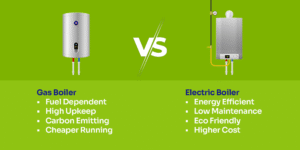
- The electric boilers never lose energy through burning like gas boiler systems do.
- Electric boilers are small and quiet. These features make them perfect for modern small flats and tiny homes.
- Electric boiler systems can last longer and cost less for regular running than traditional gas systems, as they don’t need extra components like gas boilers.
- Electric boilers are thought to be safe, clean, and good for the environment, especially when they run on renewable energy.
- Electric boilers work perfectly with solar PV panels or wind energy systems, allowing homeowners to save money on heating costs and make their homes carbon-neutral.
Disadvantages of Electric Boilers
- The cost of electricity is more than gas in the UK right now, which is one of the worst things about electric boilers.
- Electric boilers typically don’t put out as much heat, which makes them less effective for bigger homes or homes with more than just one bathroom.
- If the power goes out, there will not be any heat or hot water.
- Some electric boilers require revised wiring or circuit breakers, which can make installation slightly more costly.
Advantages of Gas Boilers
- Gas remains cheaper per unit compared to electricity, so gas boilers are cheaper to run, especially in homes which require a lot of heat.
- Gas boilers are capable of heating large homes while maintaining high water pressure for several taps or showers.
- Gas boilers provide you instant heat and a strong flow of water, so you can stay comfortable regardless of whether it’s cold outside.
- Gas infrastructures cover most of the UK, and there are a lot of qualified engineers available, which makes repairs and replacements faster and easier.
Disadvantages of Gas Boilers
- Burning gasoline emits carbon dioxide, which is harmful for the environment. As part of the net-zero plan, the UK government prefers to stop installing new gas boilers in new homes.
- A Gas Safe engineer must service gas boilers on an annual basis to make sure that they remain safe and work effectively. This is an extra yearly cost.
- Gas leaks and carbon monoxide poisoning are potential dangers, although they do not occur very often. This is why safety checks are so important.
- Gas boilers typically get larger and more complicated to fix; therefore, they are more likely to require repairs over time.
Types of Electric vs Gas Boilers in the UK
The area of your home, the amount of heat you need, and how you’d prefer to use energy will all influence which boiler is best for you. Electric and gas boilers are the two main types of heating systems in the UK. There are several models of each type which are made for different types of homes.
Types of Electric Boilers
- Combi Electric Boiler: This type of electric boiler provides heating and hot water directly and is best for small homes.
- System Electric Boiler: They are comparatively best for homes that have high hot water demand, as they have separate hot water cylinders.
- Storage Electric Boiler: These come with a built-in tank that can store hot water that can be used later.
Types of Gas Boilers
- Combi Gas Boiler: Best option if you want instant heating and hot water without the need to install a cylinder. This feature makes them suitable for smaller properties.
- System Gas Boiler: They contain separate hot water cylinders and are most suitable for medium to large homes that have multiple bathrooms.
- Regular Gas Boiler: These conventional boilers are known as the transition regular boilers that are normally used in old UK houses. They are most ideal for homes that already have existing pipework.
| Property Type | Recommended Boiler | Reason |
| Flats & Apartments | Electric Combi or Storage Boiler | Compact design, easy installation, no gas connection required |
| Small Homes | Electric Flow or System Boiler | Efficient heating, low noise, suitable for limited space |
| Medium Homes | Gas Combi or Condensing Boiler | Affordable running costs, high output for multiple rooms |
| Large Homes | Gas System or Regular Boiler | Can handle multiple bathrooms and high water demand |
| Off-Grid Properties | Electric or Hybrid Boiler | Renewable-friendly and independent from gas supply |
Choosing the Right Boiler for Your Home
- Electrically generated boilers perform best in small homes and tiny apartments. Gas boilers can be used in homes that need more heat.
- Gas is less expensive than electricity. If your main concern is monthly energy bills, gas boilers will cost less to run over time.
- Electric boilers are great, as they do not require to be linked to anything new, which saves money.
- Electric boilers are more beneficial for the environment as they use renewable sources of energy.
FAQs
Is it less costly to install electric boilers than gas boilers?
Yes. Electric boilers are less complicated to install, as they don’t need a flue, gas pipe or ventilation. This makes them cheaper and faster to install.
How long does an electric boiler last for?
An electric boiler can last 15 to 20 years with minimal maintenance; that’s often longer than a gas system.
Is it possible to change my gas boiler for an electric one?
Yes, it can be possible to make the switch, especially if your property is small or insulated well.
Which boiler is better for the environment?
Electric boilers are not harmful to the air when they’re used, and they also get even greener when they are powered by renewable energy.