To keep your home warm and your heating system operating well, it’s important to know how to drain your central heating system safely. Knowing how to drain your central heating system can not only save you money but also help keep your property from getting damaged in the future, whether you’re replacing radiators, fixing low heat problems, or getting your house ready for the colder months.
This entire guide will provide you with everything you need to know about draining a central heating system, including why it’s important, what equipment you’ll need, and a clear, step-by-step method you can rely on.
Why Drain Your Central Heating System?
During the wintertime your central heating system is working harder to keep your home warm and provide you with sufficient heat. But over time, many particles like dirt, sewage, and rust can build up in the pipes and radiators. This causes blockages, resulting in slowing down the flow of water and making your boiler work harder than it’s capable of. This can increase your energy bills immensely while causing uneven heating across your home.
There are many reasons why you need to drain the central heating system:
Maintenance and Repairs
Draining the system before completing essential plumbing work, replacing radiators, or fixing leaks prevents your property from flooding when maintenance has been done.
Remove Sludge and Debris
By not cleaning your heating system from time to time, you’re giving space to sludge, limescale, and various other debris to build up in your heating systems, which will over time lower their efficiency and trigger blockages. If you drain frequently, this will maximise effectiveness.
Avoid Frozen Pipes
Draining the system minimises the risk of pipes stalling or even breaking if your property will not be occupied during the winter. This could result in damage costing thousands of pounds, as there won’t be anyone to take care of the system properly.
Annual Inspection:
If you want to extend the life of your boiler and want to ensure its reliability, several professionals recommend yearly system drainage as an important part of your routine maintenance.
Preparation to Drain a Central Heating System
It’s essential to have everything prepared before you start draining your central heating system. Taking a few extra precautions can make the entire process safer, faster, and more effective. This can also help you avoid leaks or water damage later on.
Safety Precautions to Take
This process requires knowledge and skills, so the safest and most reliable option for the vast majority of households is finding a Gas Safe certified engineer.
Nevertheless, if you want to do it yourself, make sure to:
- Before you begin, please be sure your boiler and electricity are both off.
- Let the system cool down for at least 30 minutes so you don’t get burnt by hot water.
- To prevent the system from using more fresh water while you’re draining it, switch off the main water supply.
- During the entire procedure, keep children and pets out of the area.
- If you follow these simple safety rules, you won’t get harmed, burnt, or make unnecessary messes.
Tools Needed to Drain Central Heating System
If you choose to continue with draining your system, make sure you have these tools ready:
- Garden hosepipe that is long enough to reach outside
- Flexible spanner
- Bleed key for the radiator
- Large bucket or a container
- Some old towels and rags
- Jubilee clips
- A central heating system inhibitor for refilling
ECO4 Scheme Eligibility
“100% Free Check – No Hidden Fees”
Steps to Follow to Drain a Central Heating System
Follow the step-by-step instructions below to properly drain your central heating system once you’ve assembled all the tools and made sure everything is safe.
Step 1: Turn Off & Cool Down Your Boiler
You need to unplug your central heating and make sure it’s turned off completely. This is the most important step for your safety. It may take an hour or so to cool down, but to further go with the process, it’s crucial to make sure the entire heating system is cooled. On the control panel of your boiler you will find a power switch. Make sure you have turned it off. If you don’t find the switch, you can use the heating system manufacturer’s guide. Be patient during the cooling step, as hot water from the boiler can cause you severe skin burns.
Step 2: Cut Water Supply
After shutting off the electricity, now you will need to stop the main water supply, which is usually present under the kitchen sink or somewhere near the water meter. This step will prevent fresh water from entering boiler pipes while you are draining. This is considered the most important step, as most modern heating systems draw water directly from the main supply, unlike the traditional boilers that used to have separate water tanks.
Step 3: Find the Drainage Valve
Now find the drainage valve, which is usually at the bottom of the heating system. This should be near the bottom of the lowest radiator in the house, which is usually in the downstairs room. Some systems may have their drainage valve situated outside the home.
This valve is usually shaped like a tiny tap or like a connecting point that is generally orientated at 45 degrees away from the radiator.
Step 4: Insert the Gardner Hosepipe
Use a jubilee clip to guarantee that your garden hose is properly connected to the drainage valve. Point the opposite end of the hose at an appropriate drainage spot outside of your property. Also, avoid letting the water drain into plants or lawns, as the harmful substances in heating system water could hurt their growth. Set a bucket under the valve for drainage to capture any minimal leaks, in addition to towels prepared to clean up.
Step 5: Open Drainage Valve
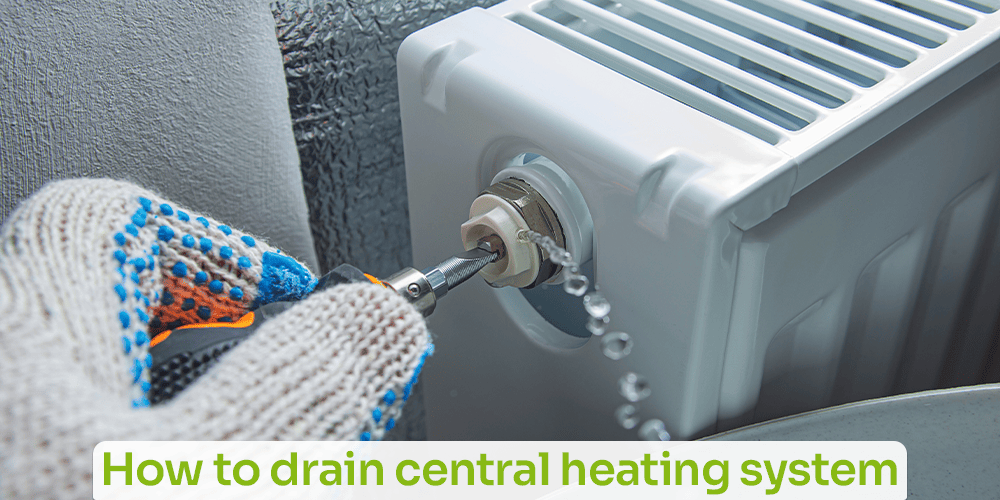
The drainage valve can be opened if you carefully turn it in the opposite direction with your spanner. The connection between the hose will start to allow water out. While practising this, maintain a close eye on the hose connection since water pressure can at times make hoses appear unsecured. Provide the initial drainage for some minutes, but keep in mind that this won’t empty the whole system.
Step 6: Bleed the Upstairs Radiators
You need to open the valves to let air flow into the drainage system in order for every drop of water to be drained completely. First you need to bleed all the upstairs radiators of the heating system.
For bleeding radiators, you just have to simply use your radiator key to turn each bleed valve in the opposite direction till you detect a loud sucking sound. This indicates that air has entered through the system.
This approach allows water that becomes stuck in the radiators to flow down to a drain. The sound you hear proves that the valve is now open properly.
Step 7: Bleed the Downstairs Radiators
After letting the upstairs radiators drain for over 15–20 minutes, do the exact same thing for all the downstairs radiators too. This approach guarantees that water from all parts of the system can pass through the drainage valve.
Some households have heating systems that are separated into zones. Be sure to check all the heating radiators in your home.
Step 8: Shut Each Valve
Now close all of the bleed valves tightly to prevent dirt and insects from passing through the pipes. Remove the hose and wipe out all damp spots.
Do You Need a Professional to Drain a Central Heating System?
Even though this step-by-step guide covers everything you need to do in order to drain your central heating system, under some circumstances you may need to call a professional for help. Such as:
- If you aren’t confident about any of the steps mentioned in the process.
- If you are dealing with a really old or complex heating system.
- If there’s any leak during the process.
Benefits of Regular Heating System Maintenance
Regularly maintaining your heating system has several benefits:
- Removing harmful components can increase the flow of water, which will improve heating efficiency and potentially result in reduced energy costs.
- Systems that are cleaned properly usually don’t face as many issues as the uncleaned boilers.
FAQs
How do you drain a heating system with a combi boiler?
Turn off the boiler, shut off the water supply, connect the hose to the drainage valve, open the valve, and then bleed each radiator carefully and slowly.
How do you get the water out of the boiler heating system?
To get all the water out, cut off the main water supply, open the drain valve on the lowest radiator, and bleed all the other radiators.
How do I clean my central heating combi boiler?
A professional power flush needs a Gas Safe engineer and special tools. This process involves emptying and replacing flowing chemicals.
Do you need a drain for a combi boiler?
Yes, all combi systems need to be able to drain through a drain valve or vent disconnection so that maintenance and repairs may be done.