CO2 Reduction delivers sustainable heating for a cozier, greener, and more efficient home.
You could be eligible for FREE cavity wall insulation under the official Great British Insulation Scheme (GBIS) and ECO4. See if you qualify in 30 seconds.
Quick Facts
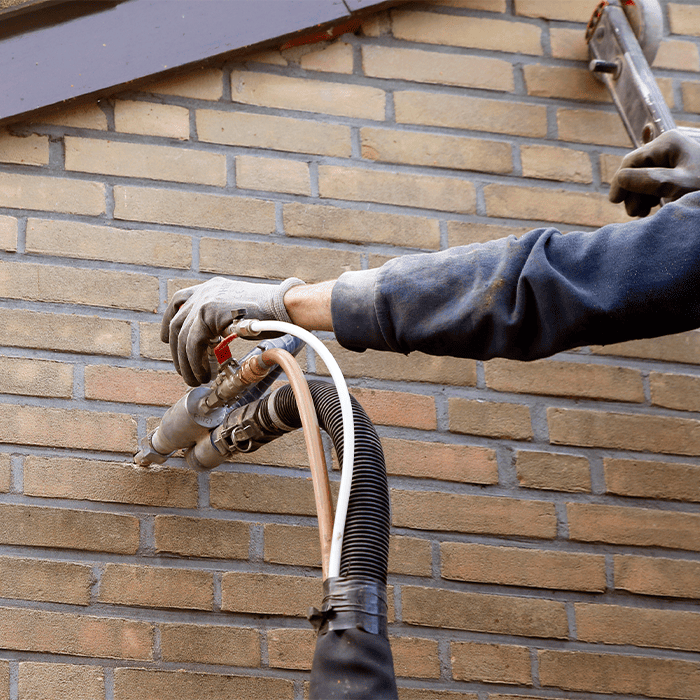
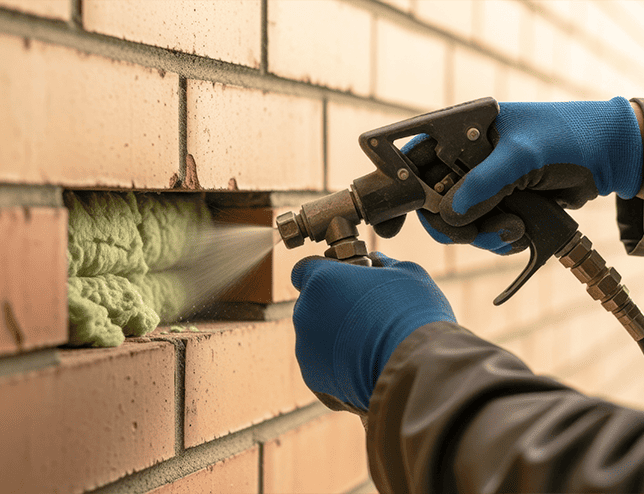
What it is: Cavity wall insulation is the filling in of the gaps between the two layers of an external wall with insulating material that helps in stopping the heat from escaping.
Why it’s important: Some walls don’t retain heat in; therefore, up to 33% of heat may leak out.
Savings: You can gain several hundred pounds a year in savings.
Areas: Wales, England, and Scotland are covered under this scheme.
How to Apply for Cavity Wall Insulation Grants
Find out in 30 seconds if you qualify.
TrustMark-approved and PAS 2035 compliant.
by Gas Safe registered engineers.
Find out in 30 seconds if you qualify.
TrustMark-approved and PAS 2035 compliant.
by Gas Safe registered engineers.
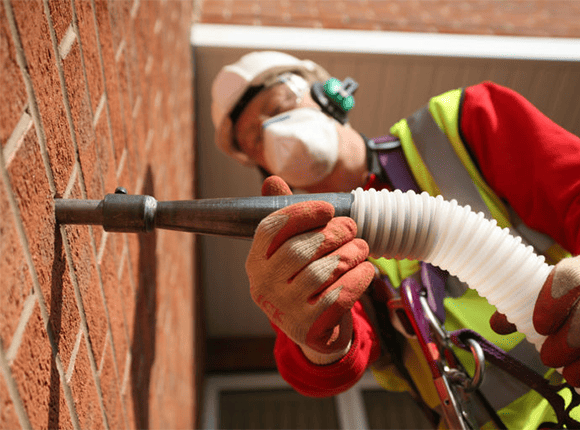
Polystyrene beads, mineral wool, or foam are used in wall cavity wall insulation to fill the gaps between a home’s inner and outer walls. These materials keep heat inside the home. This event uses less energy and keeps heat inside more effectively. It reduces utility bills, makes the house warmer, and prevents warm air from escaping through the walls, resulting in minimising carbon emissions. To make sure they work effectively and to prevent problems like moisture from happening, only qualified professionals are required to build cavity walls.
Cavity wall insulation reduces the transfer of heat by filling the area between the inside and outside walls of a building with insulated material. Without insulation, heat can simply escape through the walls of your home. Therefore, heating systems work more aggressively and cost more. Insulation helps keep objects cooler in the summer by closing these gaps and warmer in the winter by closing these gaps. In the long term, this method uses less energy and emits less carbon, and it additionally makes things more comfortable.
Here are the common eligibility criteria used in the UK for the free cavity wall insulation government scheme:
You are more likely to qualify and get a free cavity wall insulation grant if you receive certain benefits:
You might be able to qualify for funding even if you don’t get benefits if
If living in a cold house makes your health worse, your doctor or the NHS Trust may tell you to get help from ECO4. This is applicable to the situation like
Some homes assume they don’t meet the requirements, although they actually do.Our specialists will look into all of your options to get you the money you need if you apply today.
This typical substance is created from glass or rock wool and comes in batts or blown-in fibres. The most appealing thing about it is that it won’t catch fire, which makes it safer. But when it gets wet, it doesn’t insulate very well, and if it’s not installed properly, cracks might appear, so it’s extremely important that the material remains dry.
This type of cavity wall is bombarded with tiny, bright beads. They are an affordable alternative and work well for filling spaces with irregular shapes. Installation quality is crucial because poor installation can cause the beads to settle over time or open up pathways for moisture to enter the cavity.
This method works effectively for small areas because it injects foam into the hole that rises to completely fill it. Since it has a higher quality seal, it usually costs more. A qualified professional should put it up because a defective fit could make the wall less efficient at preventing moisture.
This category includes substances like cellulose or wool grains that are put in the cavity. It works effectively to repair walls that are currently bumpy. If the wall cavity insulation is not present in the correct way, it might settle and leave holes that aren’t sealed (cold patches).
By choosing cavity and wall insulation, your home will consume less energy, your heating bills will decrease, and your carbon footprint will be reduced. Many households in the UK can get cavity wall insulation free through programs like the Great British Insulation Scheme (GBIS) and ECO4 if they satisfy the conditions.
Loading..........
The Data is Not Available
CO2 Reduction manages everything for you, from checking to see if you qualify to applying for government funding to get free cavity wall insulation grants and organising the installation to making sure your home qualifies for government programs that supply cavity wall insulation.
Fill out the form below to request a free evaluation and see if you can get help from free cavity wall insulation grants in your area to prevent your walls from losing heat.
Filling the area (cavity) between the exterior walls with an insulating material to keep heat in.
By filling in empty gaps, insulation keeps homes warm and stops heat from escaping.
You can apply for grants through programs like GBIS or ECO4 if you fulfil the criteria.
Mineral wool, free fill that is blown in, foam that is injected, and polystyrene beads.
EPC, council tax, benefits, or income standards for individuals who own or rent a house and meet the requirements.
It can help if it's put in an appropriate spot, but if it's installed in the wrong spot, it can make the dampness worse.
It should last between 25 and 40 years if it's done well and the walls don't get damp.
It lasts a long time, but you may need to repair or replace it if the walls move or the insulation breaks out.
You require an EPC report, proof of income or benefits, and proof that you own or rent the property.
Yes, as long as the landlord confirms it's permitted and all the other rules are followed.
Yes, many households save hundreds of pounds a year on their energy expenditures.
They drilled holes in the outside wall, put in insulation, sealed the holes, and checked every aspect.
It can get a higher grade for being energy efficient and be easier to sell.
Yes, certain programs may offer free insulation for the outer walls of homes that don't have hollow walls.
No. GBIS doesn't offer free cavity wall insulation in Northern Ireland.
No. GBIS doesn't offer free cavity wall insulation in Northern Ireland.
You might be able to get a new or extra layer of insulation through a grant if your current one isn't good enough.

CO2 Reduction delivers sustainable heating for a cozier, greener, and more efficient home.
Quick Links